Boronias (Boronia spp.)
Boronia are small evergreen native shrubs usually no more than 1m high, grown for their pretty spring flowers. Many species of Boronia grow across Australia.
As well as bearing attractive flowers, some boronias are highly fragrant while others have scented leaves. Check out the local hardware or garden centre for varieties of boronia that suit your location. Here are a few to consider:
- Brown Boronia (Boronia megastigma) has an outstanding floral fragrance and produces unusual brown and lime toned hanging bell-shaped flowers. It flowers during winter or early spring. There are several named varieties including ‘Heaven Scent’.
- Boronia hybrid ‘Plum Bells’ has aromatic green narrow leaves with small pinkish-purple flowers in spring. Growing to a height of around 1m, it appreciates a prune after flowering to hold its compact shape.
- Boronia Yellow (Boronia megastigma Lutea) is recognised for its profusion of perfumed yellow flowers from late winter to early spring. It prefers dappled shade but will also grow in full sun. It is ideal for rockeries, pots or native gardens.
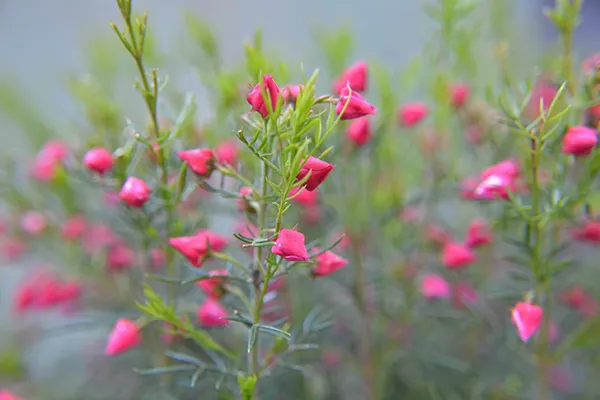
- Red Boronia (Boronia heterophylla red) has highly fragrant red flowers from late winter to early spring. It is ideal to use both the flowers and the foliage in a cut flower display. This variety also attracts bird and insect pollinators.
- Boronia ‘Sunset Serenade’ (Boronia muelleri) is a fragrant bush with pink and white flowers and yellow centres from spring until late summer. Growing to a height of around 1m, it will love a prune after flowering to keep its shape.
Other species of boronia have white to pink flowers and flower mainly in spring, so look out for new varieties. In flower, boronias are attractive to beneficial insects including bees and add colour to both native and cottage-style gardens and pots.
Growing conditions
Aspect Boronias grow in a bright location but also thrive in partial shade such as under the light shade of native trees. In a warm climate, morning sun and afternoon summer shade is preferred.
Soil Plants need a slightly acidic (5.5 to 6.5 pH), well-drained soil but shouldn’t be allowed to dry out. Brown boronia in particular needs a cool root run and doesn’t tolerate dryness. Boronias are also great in a pot around a doorway or entertainment area with their beautiful perfume. When planting use a premium potting mix.
Climate Boronias grow in a wide range of climates from cool to subtropical reflecting their broad distribution across the country. Choose a variety to suit your climatic conditions.

General care
Watering Most boronias appreciate a regular water. Water regularly and more frequently if plants are in exposed conditions or growing in containers.
Feeding and mulching Boronias are not heavy feeders. Feed once a season when growing and flowering with a complete granular fertiliser such as PowerFeed Controlled Release All Purpose including Natives.
Mulch plants with a coarse wood chip mulch especially recycled bark, eucalyptus mulch and pine bark mulch, as it promotes microorganism activity in the soil which keeps the roots cool and retains soil moisture.
Pruning Prune after flowering to encourage compact growth and repeat flowering to promote good health.
Watch out Boronias have few pest problems, but their leaves may occasionally be attacked by caterpillars (remove by hand) and plants under stress can be attacked by scale or aphids. Treat with an organic pesticide such as EarthCare White Oil insect spray. Plants in highly humid locations or that are not grown in well-drained soil may be short lived.