Growing a lawn from seed can be an excellent way to save money. It also gives you the freedom to customize your lawn, such as choosing your preferred mix of grasses.
If you are unsure of what grass variety will best suit your garden and climate, talk to your local lawn specialist, hardware or garden centre for great advice. For information on lawn varieties check out our understanding lawn varieties guide.
Learn how to sow lawn seed for beautiful results that last ages with our 7 Steps to How to Sow Lawn Seed. The following tips are practical for beginner DIYers and experienced lawn lovers.
Sowing a new lawn from seed can be challenging, but Seasol seed and lawn care products help you create the ideal conditions for great results. Discover high-quality lawn products for a picture-perfect yard.


Step 1 – Selecting grass seed
Choosing the right seed is an important factor for success when planting new grass. When you visit your local lawn specialist, hardware or garden centre, tell the personnel about:
- The areas your need to cover.
- Planting in a shady or bright area of the lawn.
- Significant slopes and water (rain) draining off.
- Any outdoor pets or family use such as kids playing sports or backyard fun.
- What type of soil you have? Sandy soil or beach property?
Depending on which part of Australia you live in, your lawn specialist, hardware or garden centre, may recommend cool-season grasses, warm-season season grasses or a blend.
Some varieties thrive in shady areas. Others are durable but need lots of water, such as fescue and ryegrass. Warm-season grasses, including Kikuyu and buffalo grass, offer hardiness in arid climates.
When to plant.
Most of the time, you should plant in mid-to-late spring. Pure cool-season varieties like the end of autumn or the beginning of spring instead.
Most lawn seeds will germinate within 7 days depending on weather conditions and the variety of grass chosen. Expect a lawn within 12 weeks of sowing, however, it may take a bit longer to look amazing compared to laying lawn turf.


Step 2 – Prepare the soil.
Planting a new lawn is like getting ready for the arrival of a baby. Parents spend time preparing the baby’s room to make it welcoming and safe.
Before planting lawn seeds, you need to prepare your soil just as carefully. That way, new grass has the ideal starting conditions to grow strong and healthy.
- Removing weeds and grass
Weeds hurt grass seeds by stealing water and nutrients. Before planting a new lawn, you should remove as many weeds as possible.
Control weeds before tilling. Otherwise, they often grow back while lawn seeds are still germinating.
- By hand: The cheapest way to get rid of weeds is to pull them by hand, but takes time and effort. This is a good way for a small area, for a larger area consider one of the options below. Grasp the weeds near the base to remove them by the roots.
- Turf or sod cutter: To remove a large volume of weeds or dried grass, use a turf or sod cutter. Turf or sod cutters create swaths of ground about 7cm deep, removing the top layer of soil. This saves you time, gets rid of weed roots effectively and keeps you from shovelling.
- Weed killer: Weed killer is an effective solution for dirt with a lot of weeds. Apply a non-toxic weed killer, such as fast-acting Earthcare Organic WeedKiller spray. The advantage of organic weedkiller is that the ingredients break down naturally in the soil, leaving no harmful residues behind.
- Tilling
If your soil is not healthy and fertile ready for grass seed. Use a tiller to break up compact or dry soils. For smaller lawn projects, a cultivator can also complete the job.
Water the soil thoroughly a day or two before tilling to ensure water is going down into the soil. If water is pooling on top or running off, applying Seasol Super Soil Wetter & Conditioner will help to ensure water stays within the soil.
Cultivators cut through the top layer of soil (a maximum of 15 centimetres), leaving the ground soft and aerated.
Tillers weigh more (45 to 90 kilos), but they cover more ground and reach depths of 20 to 25 cm.
Breaking up the soil allows germinating seeds to easily penetrate the ground in search of water and nutrients. Some varieties of grass have roots that extend 50 to 60 cm deep.
- Getting rid of rocks and debris
Take the opportunity to improve the overall condition of your yard. Before and after tilling, get rid of rocks, branches, roots, and other debris.
- Levelling
Tilling creates large mounds of dirt, which aren’t ideal for planting grass seeds evenly. Use the back of a bow rake, garden rake or landscaping rake to distribute dirt and level the ground.
If you need help following your yard’s natural grade, use a string line and a pair of stakes:
- Cut 3 metres of braided string line.
- Tie one end of the string to each stake.
- Hammer the first stake into the ground near the top of the yard.
- Stretch the line downslope.
Use the string as a reference until you have a flat grade.


Step 3 – Adding water & nutrients for healthy soil
Fresh lawn seeds depend on good food for healthy growth. Give your new lawn the best start by making sure it offers the nutrients and moisture conditions that support germinating seeds.
Lawn pre-care is a smart investment too. Preparing the soil before planting is much easier than fixing growth or pest problems later on.
It’s a good idea to water again right before seeding. Again check that water is going down into the soil and reapply Seasol Super Soil Wetter & Conditioner hose-on if required. It contains a wetting agent and soil conditioners to help water penetrate soils by improving water-holding capacity and nutrient uptake for sandy soils.
The goal is to leave the ground moist but not too wet. Watering helps improve soil contact for better germination.
Lawn pre-care is a smart investment, too. Preparing the soil before planting is much easier than fixing growth or pest problems later on.
- Soil quality
The ideal soil for grass growing is a mixture of dirt, clay and sand. This soil type is called loam.
Clay helps with bulk and offers plenty of nutrients. Silt or dirt is excellent for retaining moisture and supporting root growth.
Sand breaks up the heaviness of clay, allowing for good drainage. Sandy soils also provide good insulation against extreme temperature changes.
If your home’s soil leans too far in one direction — packed with clay or too sandy — solve the problem with a corrective layer under the topsoil. The composition of your soil matters for long-term lawn health, too.
- Clay soils: Can cause drainage problems, impede root growth and elevate ground temperatures. There are two solutions: add a layer of sand or mix the clay with organic matter, homemade compost and/or Seasol Super Compost. It creates an optimal growing environment for lawn seed to germinate, combining high-quality ingredients, nutrients, good microbes and trace minerals. Both options make it easier for roots to grow.
- Sandy soils: Too much sand isn’t good for turf, either. Overly sandy soils lose moisture quickly and don’t provide enough nutrients. Use plenty of organic matter to amend this type of soil, as described above and apply Seasol Liquid Compost hose-on to help improve the soil. This fast-acting liquid compost requires no-digging and goes to work immediately to improve soil health.
- For loose earth: If your soil tends to blow away or wash away with rain, add more bulk with a thick layer of compost below and topsoil above.
- Checking soil pH.
Many grass varieties are forgiving when it comes to pH, so this step is optional. That said, if you’re planning other landscaping projects for the future — such as planting fruit trees — it’s best to amend the soil before installing your new lawn.
Soil testing kits are easy to use and relatively inexpensive, only requiring you to add some soil and water, shake and wait. Aim for a slightly acidic (6.0) to neutral pH (7.0).
If your soil tests too alkaline (7.5), amend it with organic matter or homemade compost and/or Seasol Super Compost.
Correcting overly acidic soil (5.5 or lower) is more complex. It requires adding dolomitic lime and tilling the ground. Wait 30 to 45 days before planting to give the lime time to work.
- Soil topsoil nutrients
After tilling and levelling your existing soil, add a 30-mm to 200-mm layer of Seasol Lawn Top Dress Mix. With this perfect foundation, you’re ready to plant lawn seeds right away.
Seasol Lawn Top Dress Mix is a premium mix of trace elements, slow-release nutrients and organic matter. We fortify it with Seasol GOLD and iron to improve soil condition even more.
Using nutritious topsoil costs more than working with your yard’s own soil, but the difference in quality is night and day. It’s like driving a high-performance convertible instead of a beat-up sedan.

Step 4 – Spreading the seed
Before planting, lightly drag a bow rake across the dirt to create small furrows in the ground. Rake from front to back in straight lines.
For larger yards, work in square sections that are comfortable for your reach. Rake all the squares in the same direction, one portion at a time.
Even though spreading lawn seeds precisely probably seems less critical than preparing your soil, good coverage is essential for a lush lawn.
The secret is to spread an even layer of seed over the entire lawn, without clumps or empty areas.
- Hand-sowing method
Check the coverage instructions for the grass type you purchased from your local lawn specialist, hardware or garden centre.
New lawns usually require more seed than patches or replacement grass. You may need up to 35g per sqm for a large yard. Check with your seed supplier for a guide on how much seed you will need for your new lawn.
- Using a spreader
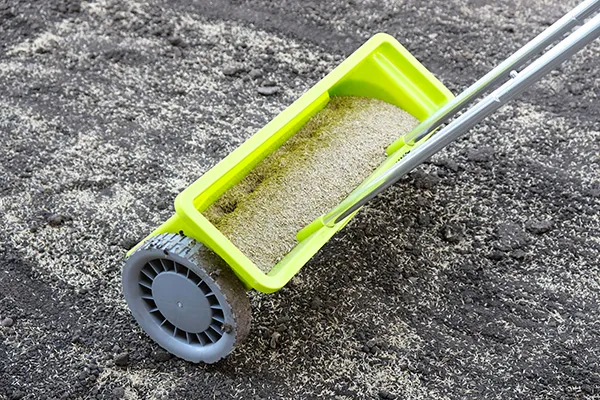
For more consistent results, use a handheld broadcast spreader or a wheeled seed spreader. This type of sowing method saves considerable time for large yards and it spreads seed evenly.
Adjust the settings on the spreader to fit the coverage instructions for your chosen lawn seed.
Fill the spreader with half of the total seeds. Walk with a calm, even pace, taking care to cover the soil completely with each pass.
Seed half of the yard rolling in one direction. After refilling the spreader, cover the rest of the soil going in the opposite direction.
Step 5 – After sowing seeding care
A few simple steps after sowing your lawn seed can be the big difference between seeds germinating or not.
- Covering seeds
Once you’ve finished broadcasting lawn seeds, take the time to gently cover them with soil. A simple solution is to lightly rake the ground in the opposite direction (crossways).
You can also walk over the seeds (or use a roller) to push them into the soil.
Some lawncare specialists sprinkle a thin layer (a few millimetres) of potting soil by hand. Others add a light covering of straw.
Grass seeds need to breathe to germinate properly, but it’s important to protect them from human foot traffic, birds and other pests. Covering with a little soil or mulch can also prevent seeds from blowing or washing away. Putting a string line around the seed area with silver strips tied to the string may help with birds and will also keep humans off it.
- Watering
Apply Seasol Lawn & Turf Starter hose-on to help aid seed germination. It also helps to promote strong root development and healthy growth, once shoots appear.
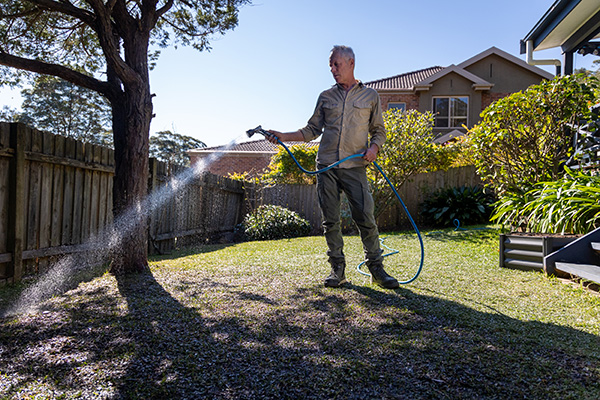
Watering regularly after planting is vital for grass seeds to germinate and grow, but you need to be careful how you water them.
If you use a garden hose for lawn care, set your sprayer to mist only. If your home has a sprinkler system, choose a fine spray setting.
Keep the top 2 or 3 cm of soil moist until the grass seeds germinate. This means watering several times a day (five to 10 minutes each time) but using mist only. You shouldn’t see any puddles.

Step 6 – Caring for lawn seed during germination.
Germination is the make-or-break stage for a successful lawn.
- Watering
Germination can take 10 days to two weeks or more. Once you see the heads of grass start to poke up from the ground, you can change the watering schedule. Water more deeply (5 cm) but less frequently.
Reapply Seasol Lawn + Turf Starter every week during the first six weeks to keep the lawn and roots growing strong and healthy and to aid lawn establishment. It’s ideal for planting new grass.
A good rule of thumb when watering is once a day for 30 minutes, though different varieties have distinct watering needs.
Once your new grass is high enough to mow (about 8 cm), change to watering two or three times a week. Wet the soil abundantly each time, keeping the top 15 to 20 cm moist.
- Maintenance
During the germination period, keep lawn foot traffic to a minimum. Only walk on the soil or grass if necessary for watering.
If you have pets, keep them off sprouting grass for at least a month or two. Bermuda and Kentucky Bluegrass varieties are more resistant to dog urine and pet play, but you still need to give the lawn time to grow.
Watch out for birds eating seeds. If the program becomes too great, consider covering the area with a fine mesh net. This can be very costly for larger areas, but is ideal for small areas. For larger areas, always ensure seeds are covered.
Step 7 – Caring for your lawn.
Minimise foot traffic for at least four weeks after laying turf. This includes keeping pets off the new lawn. Wait two or three months before inviting friends over for backyard parties.
- Fertilising
If you’re using Seasol Lawn and Turf Starter, apply the product until you have good growth. This intensive treatment provides all the extra nutrition your new turf requires.
Afterwards, we recommend using Seasol for Lush Green Lawns once a fortnight to month to strengthen and feed new grass to help them cope with heat, cold, and foot traffic and promote lush growth. Safe on all lawn types including buffalo. For a specialised buffalo formula for a wider leaf blade use Seasol for Buffalo Lawns.
- Cutting grass.
How long should you wait before mowing lawn turf? Mowing too early puts stress on the roots, but waiting too long can prevent grass from growing lushly.
As a rule of thumb, wait at least 10 days before taking out your walk-behind mower (no riding mowers for several months). The grass should be 7 or 8 cm long.
Perform a pull test before mowing. If you feel the blades coming up, don’t mow yet. Bag any clippings after mowing. New blades of grass should get plenty of sunlight.
For more lawn tips, check out our seasonal lawn care guide.